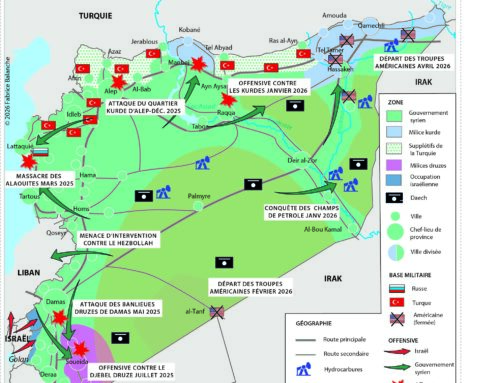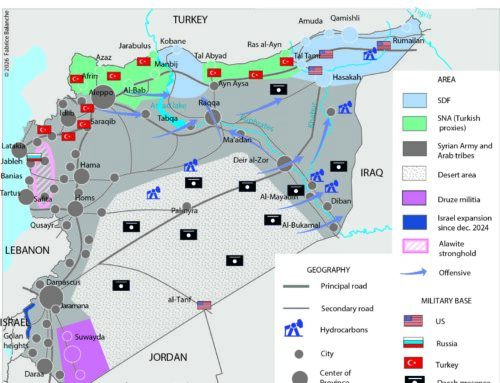
In May 2022, I wrote a report on the prospect of the Autonomous Administration of North and East Syria (AANES). I expressed skepticism about the loyalty of Arab tribes to the Syrian Democratic Forces (SDF) and the AANES. This pessimism is understandable, given the rapid loss of Arab-held territory to the new Syrian government.
In 2012, the YPG was composed solely of Kurdish volunteers. However, due to the implementation of mandatory conscription for Arabs, some Arabs joined the YPG for a few years. The monthly salary of $100 is alluring compared to other militias, civilian jobs or unemployment. Membership in this powerful militia offers benefits, such as access to material and political advantages.
Individual and Tribal Recruitments
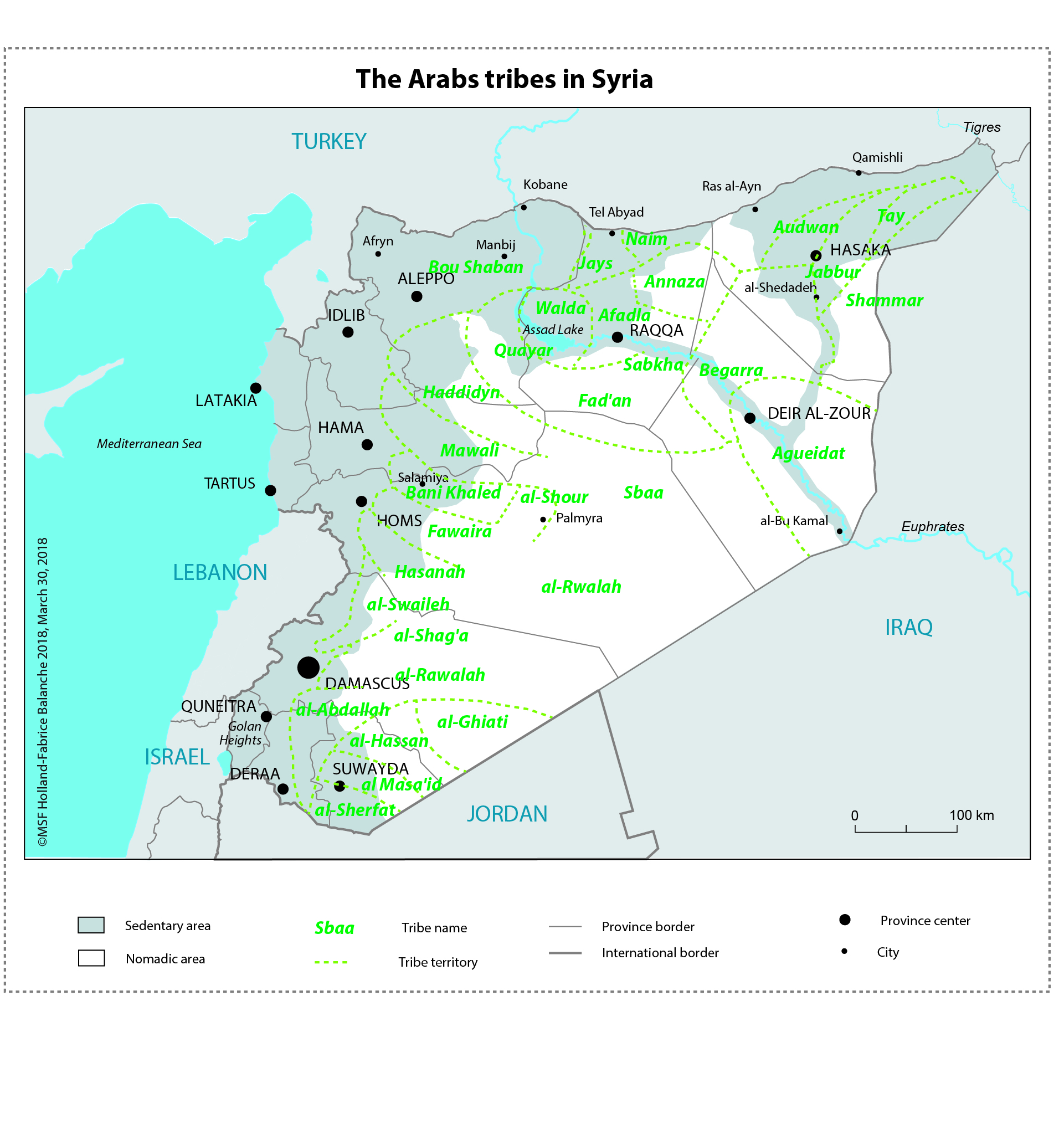
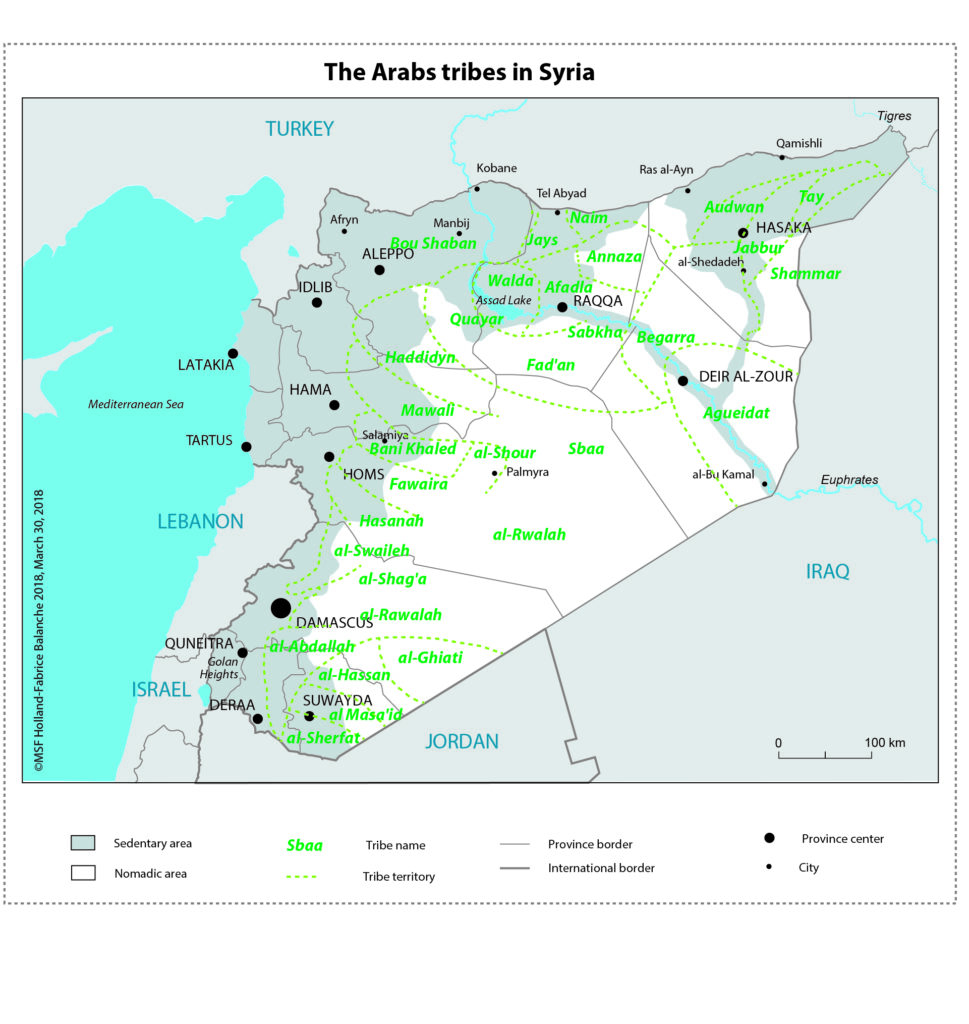
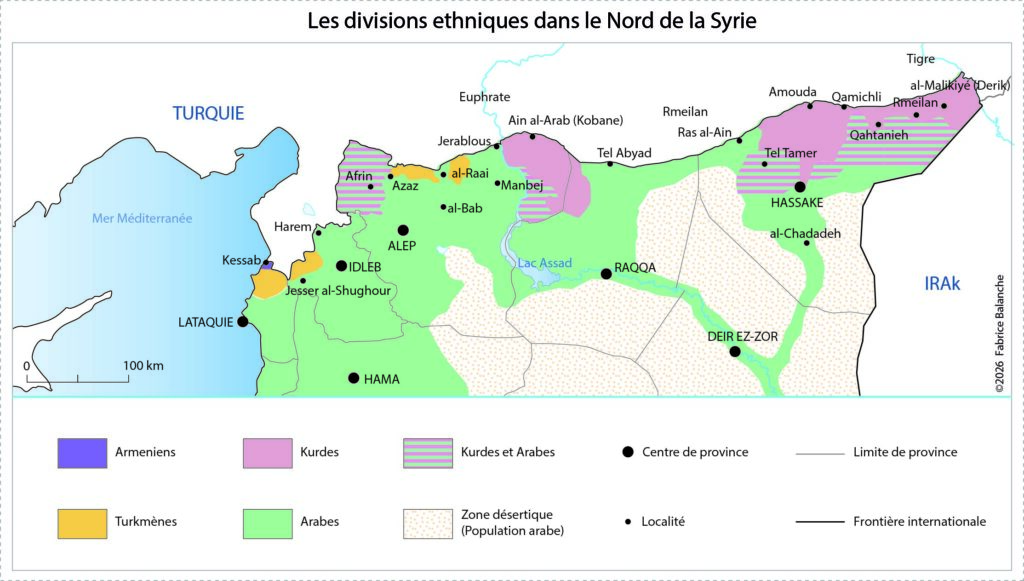
Arab recruitment occurs either individually or along tribal lines. In the Qamishli region, many members of the Sharabyeh tribe are currently involved in the YPG. Following the demise of IS in Hasaka, the leader of the Sharabyeh tribe initiated a reconciliation with the YPG, despite having been closely aligned with the Baathist regime and participating in the suppression of Kurds in 2004. Since the Shammar have their own militia, the YPG takes care not to recruit them in order to avoid conflict with the tribal leader. This is not the case, however, for hostile tribes, where the YPG makes an effort to attract young people who will then serve as relays between the YPG and the tribe.
The Tay tribe was fiercely antagonistic towards the Kurds, and in 2004, it even aided the Syrian army in suppressing the Kurdish population. As a result, the tribe was relegated to the fringes, with young men choosing to stay in their villages to avoid being conscripted into the YPG or the Asaysh. Once conscription was implemented, young men were immediately arrested at the first checkpoint on the road. During the clashes between the YPG and the Syrian Army in Hasaka in spring 2016, the Tay tribe tried to maintain neutrality, getting closer to the PYD.
The YPG is seeing an increasing number of Arab recruits, yet the proportion of Arab commanders (known as “cadro”) remains low. Once an Arab becomes a cadro, they must adopt a Kurdish name. Arab fighters are integrated into YPG units alongside Kurdish comrades, and the YPG does not favor the creation of exclusively Arab units, even when they outnumber Kurdish troops. However, there are instances of 100% Kurdish units.
What Are the True Motivations of Arabs Who Join the YPG?
Many Arabs join the YPG for the salary, as it is one of the few jobs available. Others want to escape tribal control, which is dominant in Arab militias. Some “Arab” recruits have Kurdish origins through their mother or grandfather. As a result, joining the YPG allows them to rediscover their Kurdish identity, which has now become associated with victory, rather than being citizens of a peripheral region. It is no longer shameful to be Kurdish. The inclusion of Arabs in the ranks of the YPG aligns with Kurdish-led efforts to “kurdification”.
A tribe may choose to encourage its male members to join the YPG for political reasons, with the primary motivation being to align with the victorious side. This was the case for the leader of the Shammar tribe, who joined the YPG early. He remains head of his own tribal militia, Sanaded, while working closely with the YPG and PYD, holding the position of Vice-President of Al-Jezira. His militia retains its autonomy and receives modern weaponry.
Despite the fact that the Shammar enjoy special privileges in the SDF, other tribes that later formed alliances with the YPG, such as the Sharabyeh of Qamishli, are not granted the same treatment. The male members of their group have joined the YPG-Asaysh, a military force that operates under tight Kurdish supervision. There is zero tolerance for the presence of a potent and mistrusted Arab militia in Kurdish territory. Such a group could potentially revolt against the YPG, align itself with the government, or even ally with the Rosh Pesh. Furthermore, rival militias might exploit tensions between Arabs and Kurds in Hasaka or al-Malakya (Dierik) by returning to Syria during a future crisis.
The distribution of land is a crucial factor in the assimilation of tribes into the YPG in Hasaka Province. The agrarian reform of 1963–1970 was not fully implemented in Hasaka, unlike in the rest of Syria. The state only confiscated a portion of the largest estates, giving the remaining land to tribal chiefs who had sworn allegiance to the Baathist government. Hafez el Assad did not distribute the confiscated land to the peasants because he did not want to create a class of small Kurdish landowners. State properties (amlak al-daouleh) have therefore been leased to the former landowners and to members of the Syrian regime at a low price.
The Kurdish people are eagerly awaiting agrarian reform in the Hasaka province. This includes the social base of the PYD, namely the very small owners and the landless peasants. Their children made up the ranks of the YPG, dying to build a new Rojava. Once peace returns, the Kurdish peasantry understands that the PYD will redistribute the land. They hope for favorable treatment, considering the sacrifices they have made. So far, the PYD has decided to put off resolving the land issue until the end of hostilities. The PYD has taken this precautionary measure to prevent internal conflicts, knowing full well the consequences. It’s undeniable that individuals who have served in the YPG’s ranks will receive preferential treatment. Arab tribes in the area therefore have a strong interest in sending men into the YPG if they do not want to be excluded from future land repartitions.
Military and Ideological Training is Reduced
The ideological formation of the YPG fighters has declined now, especially for the Arab fighters. Instructors now primarily focus on Ocalan, the proposed federation in Syria, the local administration system, and the bonds between different communities. However, the Arab YPGs do not seem to retain these ideological lessons, despite their loyalty to Ocalan, the charismatic leader.
Arab girls who join the YPJ share the same “feminist” ideology as the Kurds. However, only a small number of girls or women dare to challenge their family’s expectations. The YPJ avoids actively recruiting Arab girls, as this could spark conflicts.
The process of ideological development persists every day. It can take up to 10 hours in Kurdish or Kurdish-speaking units, while others require a few hours. The YPG leadership is increasingly pragmatic, as it is easing its once-rigid ban on marriage and sexual relations. This ban cannot be enforced on Arab or even Kurdish conscripts, as the need for male recruits is too great. The command must therefore compromise on its principles.
Leaders undergo a three-month training period with a strong emphasis on ideological indoctrination. The party wants to have full confidence in them and the training makes it possible to detect the good and bad elements. The best among them go on to Qandil for further political and military education. All of them are Kurds.
Conclusion
Tribes play a fundamental role in the social and political structure of the NES, especially in the Euphrates Valley. However, it’s crucial not to overemphasize their political significance. First, tribes are made up of several rival clans, meaning that the potential for political mobilization is limited to about 100,000 people, as seen with the Sheitat. The Assad regime, Russia, Turkey, and Iran are trying to gain the loyalty of various tribes. It is important to note, however, that a tribe is not for sale, but only for rent. Moreover, the tribe only works in its interest. The loyalty of the tribes is therefore fickle. It goes first to the strongest and the most generous. However, tribes also have a strong sense of history and memory. In the NES, they are submitted to self-administration because the YPG is the strongest. Despite the fact, they still maintain ties with the Syrian government because they are ensuring the future.
Kurdish military leaders are well aware that they cannot count on Arab fighters within the Syrian Democratic Forces (SDF) in the event of a conflict with Turkey or the Syrian government. During the Turkish attack in October 2019, the Arab fighters did not engage in combat. In Tal Abiad and Ras al-Ain, some even joined the Turkish proxies directly. While they are capable of fighting against IS, as seen during the attack on Hasaka prison in January 2022, their loyalty to the SDF remains limited. The ongoing presence of American troops, the consistent payment of wages, and the strict supervision of the SDF by the Kurdish leadership are the three prerequisites for the AANES to maintain the provisional allegiance of the Arab tribes in the Euphrates Valley.
Lyon, May 2022