The Syrian city of Hassaka, home to a population of approximately 500,000, is poised to come under the authority of the Syrian regime. Kurdish forces will not be able to defend it, since most of its inhabitants are Arabs who are hostile to them. Remember that, in January 2022, the Islamic State launched an attack on Sinaa Prison, where thousands of jihadist fighters are held. For months before the attack, this terrorist organization had infiltrated the Arab neighborhoods south of the city, near the prison. Kurdish intelligence services were caught completely off guard because they lacked reliable informants in these neighborhoods.
Since 2012, the city of Hassakah has experienced exponential growth due to the arrival of nearly 200,000 refugees, mainly Arabs from the Euphrates Valley and the surrounding countryside. The city’s periphery is now dominated by sprawling informal settlements. The city center has also been transformed, with Christian neighborhoods experiencing a significant decrease in population. Of the 40,000 Christians who lived in the city before the conflict, only a few thousand remain. The middle class, both Kurdish and Arab, has left the city for other countries. The arrival of impoverished communities, characterized by tribalism, has contributed to the breakdown of social cohesion.
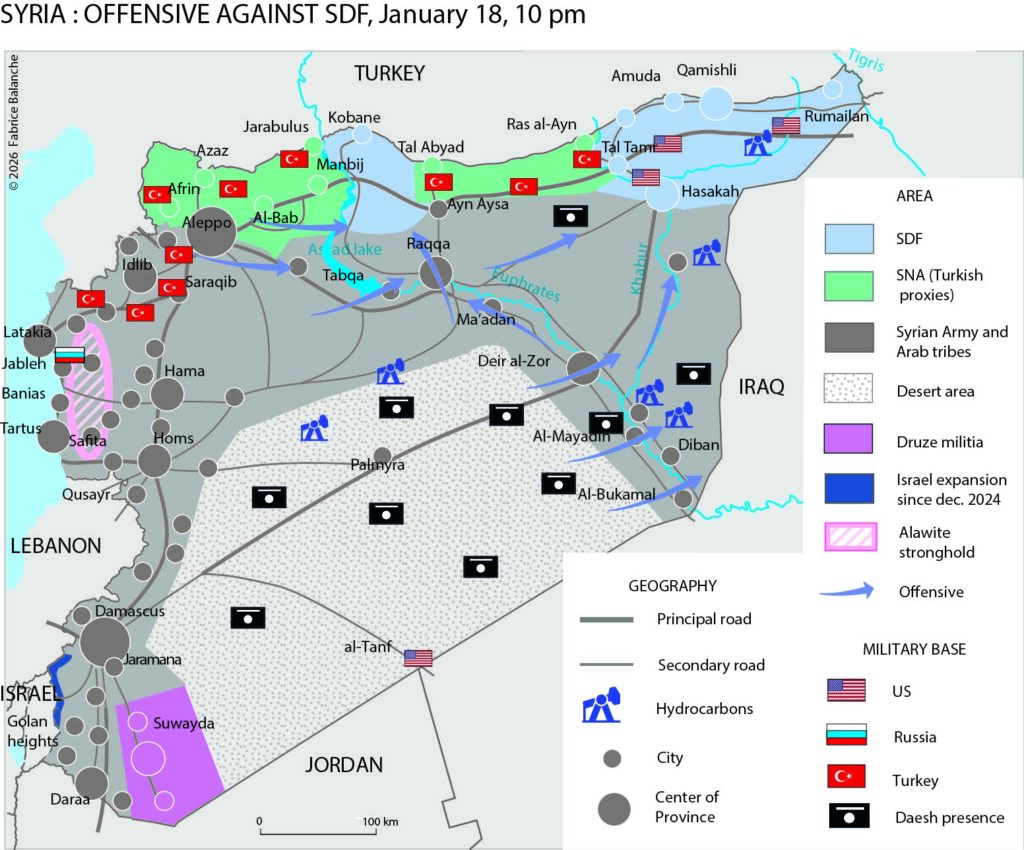
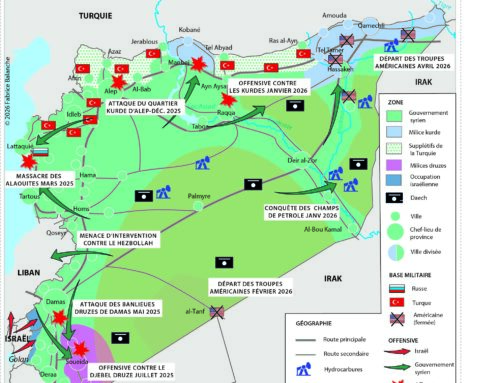
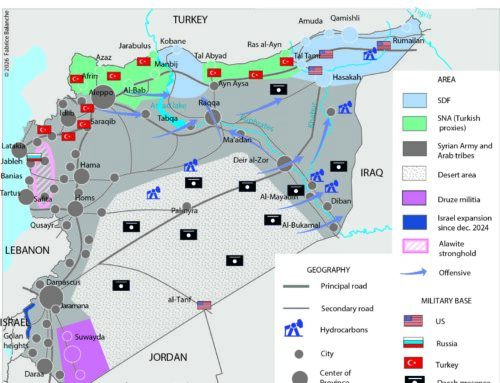
Offensive against SDF January 18
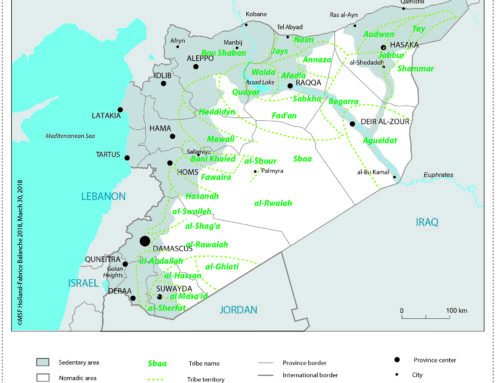
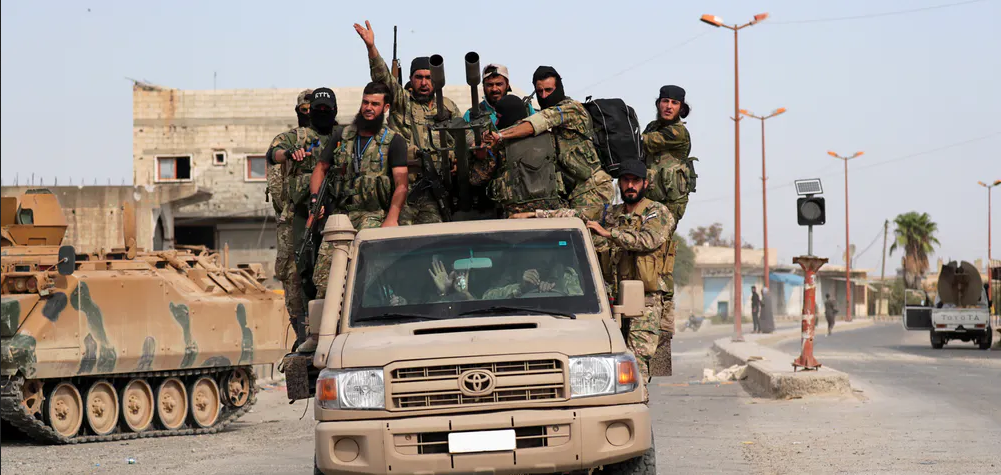
Therefore, the YPG will face challenges holding Hassaka. Al-Sharaa forces have surrounded the city, deploying in the Arab villages around Shadadeh to the south, and in those to the east, near Tel Hol. They are preparing to take Tel Tamer from the Turkish-occupied area to the west. The Khabur Valley once boasted a population of 30,000 Assyrians, but in 2015, the Islamic State launched a devastating attack on them. The population fled, leaving just 500 people who could return after the area had been liberated by the YPG. Now, the population is mostly Arab to the west of the Khabur, and Kurdish to the east. The Syrian Army can easily advance on Hassaka from there. Keep in mind that the Tay tribe, long-standing supporters of Bashar al-Assad’s regime, lies between Qamishli and Hassaka. Interestingly, this tribe has now sworn loyalty to al-Sharaa, which has cleared the way for travel between Qamishli and Hassaka.
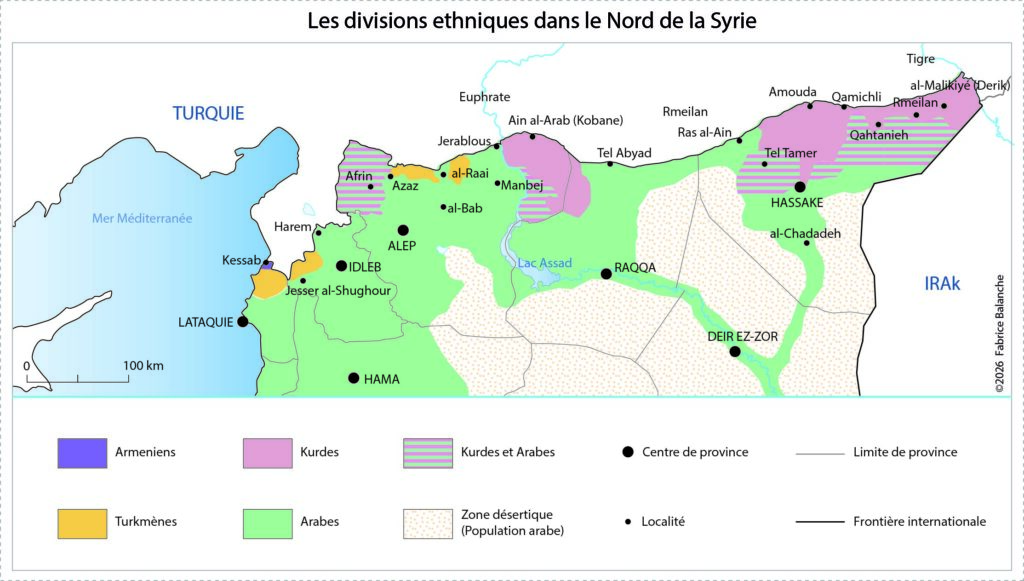
Divisions ethniques dans le nord de la Syrie
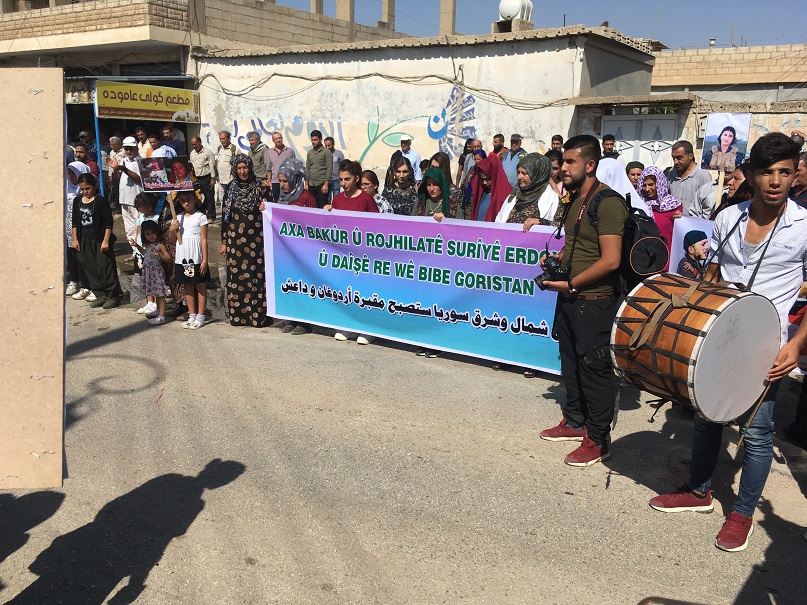
Finally, we must point out that the city of Hassaka has experienced a severe water shortage since October 2019, when Turkey stopped supplying water from Ras al-Ayn. As a result, tanker trucks are the main source of water, coming from two locations about 30 kilometers northeast, in an Arab-populated area, which makes it difficult for the YPG to defend. For the past seven years, this water shortage has devastated the city, causing daily hardship and exacerbating Arab resentment towards the Kurdish authorities, who are falsely accused of confiscating water for the Kurdish neighborhoods in the north. However, the spread of these rumors is being orchestrated by Islamist groups aiming to undermine the AANES.
If the YPG secures the city’s defense, there will be a clear division between the Kurdish and Arab sectors. The Kurdish fighters can only maintain their positions in the north. If they were to abandon their post, tens of thousands of Kurds could seek refuge in Qamishli, Derik, and the Iraqi Kurdistan region, provided the border remains open. The danger of physical harm towards the Kurdish community remains a pressing concern.