Published in Conflits, January 24, 2026
As the Syrian Kurdish forces are gradually encircled and disarmed, France and its Western allies are increasing their verbal support without acting. By promoting the idea of Syrian unity and realpolitik, Paris is effectively enabling the decline of Kurdish self-rule and the rise of a centralizing and Islamic-oriented government in Damascus. The fate of the Syrian Kurds reveals the impotence of the West, which is incapable of keeping its commitments. It is a question of whether it is strategic abandonment, diplomatic calculation, or the risk of regional chaos.
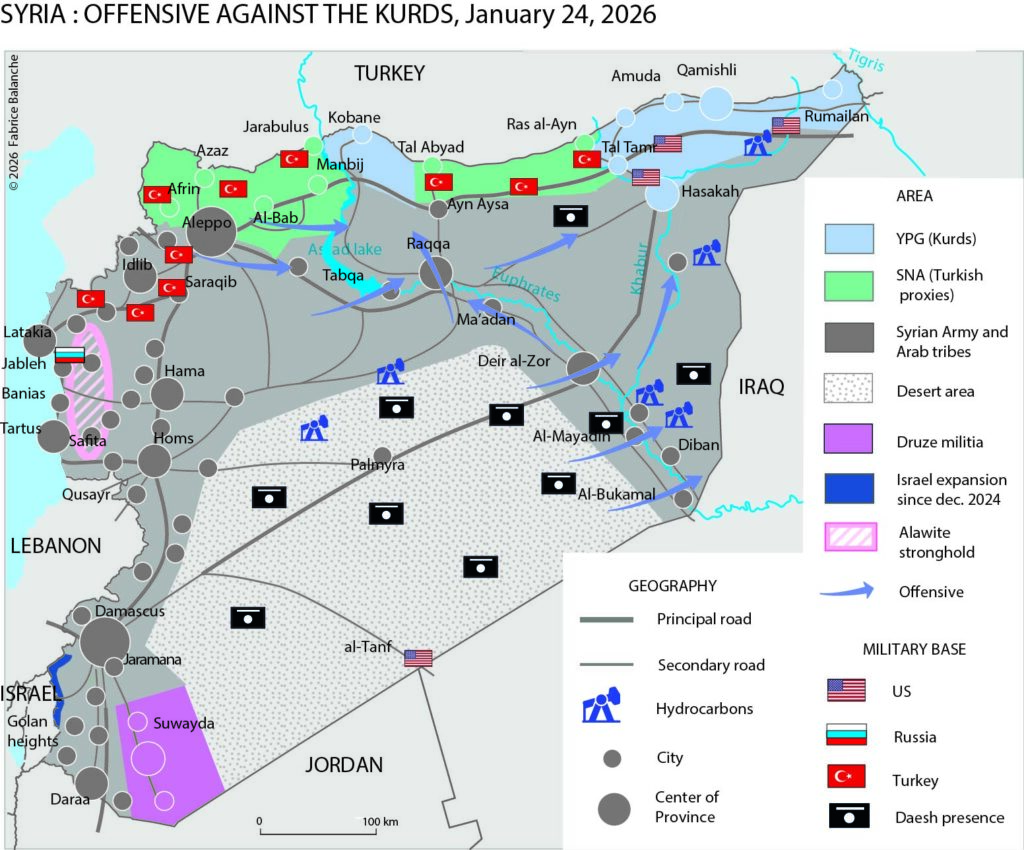
On the 24th of January, 2026, a four-day truce between Kurdish forces and the Syrian army of al-Sharaa came to an end. During this time, Western diplomats made efforts to convince Mazloum Abdi, the Kurdish leader, to agree to Ahmad al-Sharaa’s proposal for integration in exchange for leniency towards them. This is how we should interpret the recent statements of the French Foreign Ministry: “We will not abandon the Kurds”, while reiterating our desire for a unified Syria: “France is loyal to its allies and its positions.” Paris “resolutely supports the unity and integrity of Syria.” In other words, France supports Ahmad al-Sharaa’s vision of eliminating all local autonomy and freedom in favor of a centralized Islamic Republic under an iron fist. However, their primary concern is to prevent a catastrophic massacre of the Kurds, like the fate met by the Alawites and Druze in 2025. It doesn’t matter if they subsequently face daily assassinations and ethnic cleansing, because such events don’t attract media attention when they unfold over a long period. This could indicate that the Élysée Palace underestimated Ahmad al-Sharaa’s true nature. The president received him with great fanfare at the Élysée last spring, supposedly completely deradicalized. France is making the same errors with Ahmad al-Sharaa as it did with Bashar al-Assad, who was once thought to be a benevolent reformer. The country has apparently not learned anything from the Syrian crisis. (Lessons from the Syrian Crisis, Fabrice Balanche, Odile Jacob publisher, 2024).
The Collapse of the “Arab-Kurdish Federation”
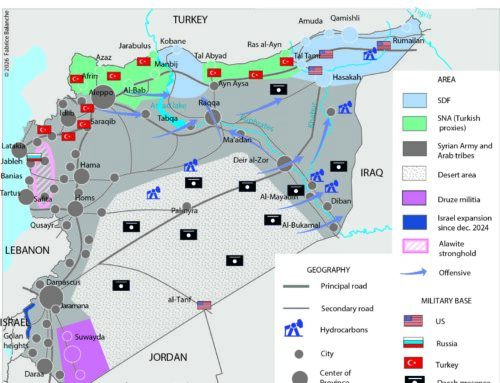
On Saturday, January 17, the Syrian Democratic Forces (SDF), a Kurdish-Arab alliance that was formed during the fight against ISIS, agreed, under American pressure, to withdraw from territories west of the Euphrates River, as demanded by Ahmad al-Sharaa. Subsequently, once this action was completed, the Syrian military crossed the river at various locations between Raqqa and the Iraqi border, thus capturing the entire Euphrates Valley. The Syrian army’s advance was facilitated by the United States’ tacit approval, which betrayed its Kurdish ally. Tom Barack, the American special envoy, declared that the SDF was no longer necessary. Ahmad al-Sharaa’s troops benefited from the support of the local Arab community in the Euphrates Valley. This population has never tolerated Kurdish domination since the defeat of ISIS. In fact, anti-Kurdish racism is deeply rooted in the collective mentality of Syria, and it increased when the Kurdish-led ruling party, the PYD, a branch of the PKK, tried to impose secular principles and the liberation of women in the region. However, the Arab population of the northeast is very conservative regarding moral and religious issues.
On January 19, al-Sharaa’s troops continued their advance towards Hassakeh and Kobani, leaving the two Kurdish regions separated. All Arab militias belonging to the Syrian Democratic Forces have now defected, including the Sanaded, an early ally from the Shammar tribe. The Kurds are the only ones left to protect what remains of the Autonomous Administration of Northeast Syria (AANES). This Arab-Kurdish federation was a fantasy, as the Arabs never supported the political vision and only desired retribution. As Bashar al-Assad remained in control of Damascus and the United States continued to back AANES, they generally overlooked the situation. There were uprisings and overtures towards reconciliation with Assad’s regime, fueled by Arab brotherhood, but these were quelled with the assistance of the international alliance. Since Ahmad al-Sharaa captured Damascus, the Arab tribes have become more willing to join the Syrian Arab Republic. They believe this will restore their regional power and traditional order, which discriminates against the Kurds.
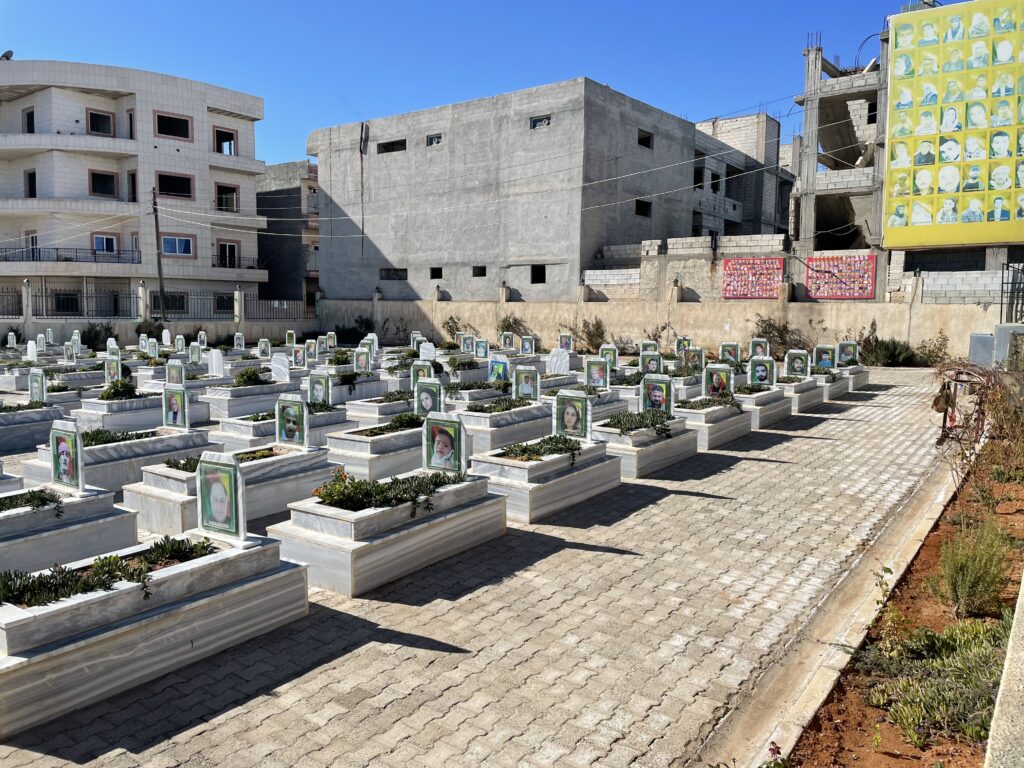
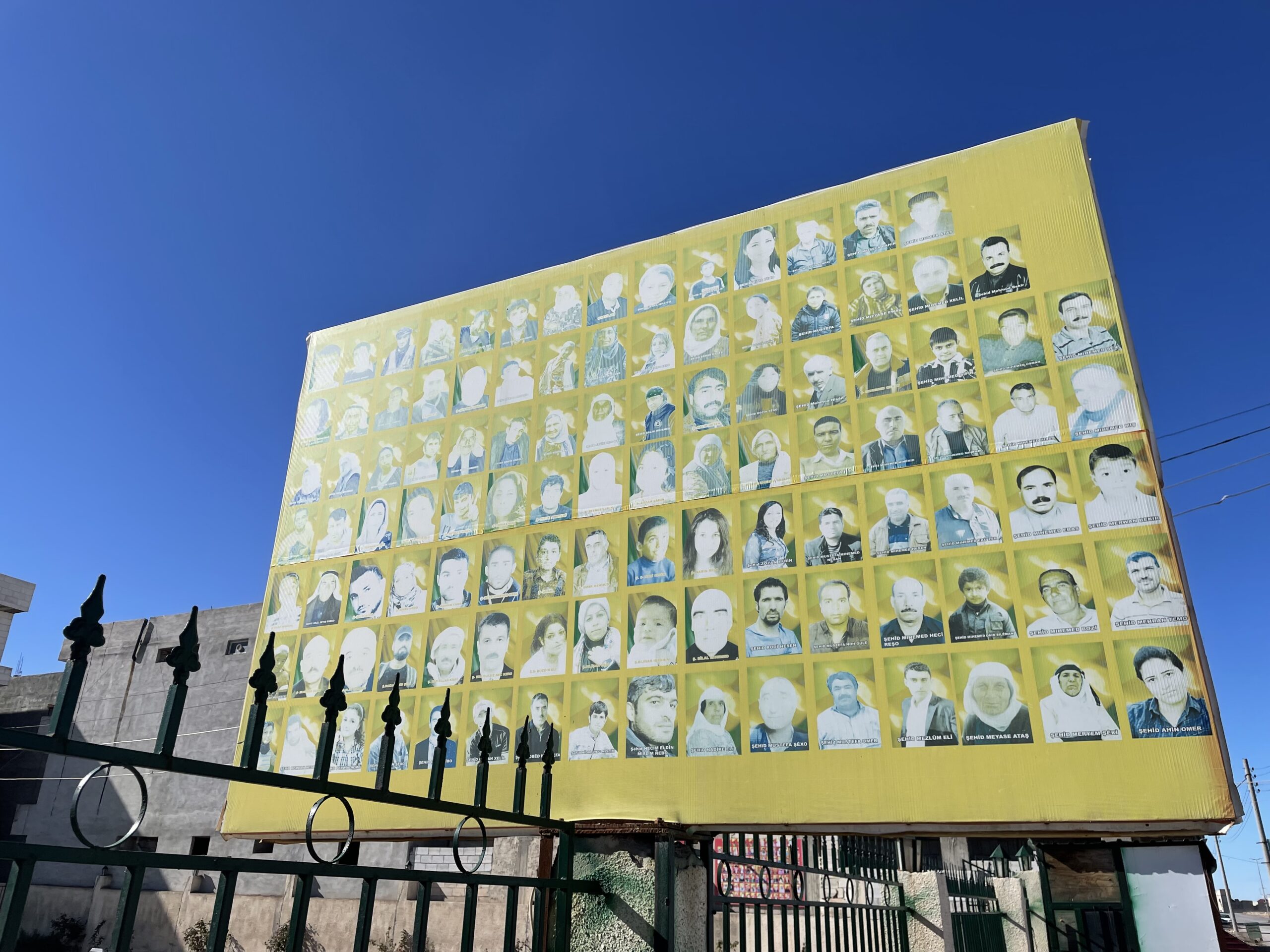
People killed by the Islamic State in 2014, Kobane
Don’t leave the jihadist prisoners in al-Sharaa’s hands
During these four-day truce, the priority of the American military, which still maintains three military bases in northeastern Syria, was to secure the prisoners of ISIS, who until then had been held by the Kurds. This task, however, was meant to fall under the jurisdiction of the administration of Ahmad al-Sharaa. The first images from the Raqqa and Shedadeh prisons show new Syrian army fighters fraternizing with the detainees and releasing them immediately. Their arrival at the Tel Hol camp, where thousands of jihadist families are being held, including around 100 French citizens, shows the same enthusiasm among the detainees. They feel that they will soon be freed from having to face justice in their country of origin. This is why the United States wants to transfer the remaining 7,000 ISIS fighters from the prisons of Hassakeh and Qamishli to Iraq. This would have provided a long-awaited chance for a globally renowned court to prosecute them. Unfortunately, it may result in their ultimate exoneration.
Regarding France, Emmanuel Macron has dispatched a representative to Damascus to ensure that French detainees do not disappear if they haven’t already. The Élysée Palace is keeping a low profile on the matter, aware of its sensitive nature. For years, France has adopted an approach of ignoring its citizens imprisoned in Syria, a policy that has been met with public resistance to their return, including that of minors. The fear is that they might commit attacks on French soil upon their return. Conversely, the French legal system does not have enough proof to mete out severe penalties. They claim that they went to Syria to provide humanitarian aid, and their wives say that they were forced to go with them. As a result, they face a maximum sentence of five years in prison for membership in a terrorist organization. Some have already served their time and are now free, but they continue to believe that their cause was righteous.
Protecting Kurdish territories presents significant challenges
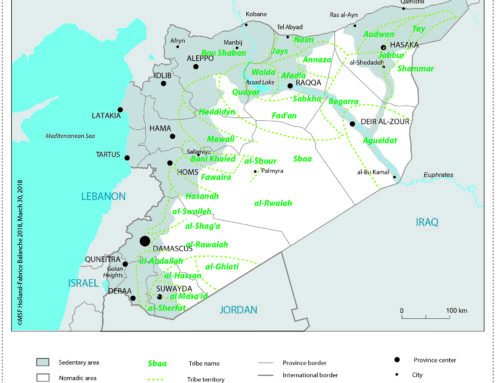
After a week of intensive negotiations, will Mazloum Abdi agree to lay down his arms and end the fighting, avoiding a bloody confrontation with an uncertain outcome for the Kurds? Al-Sharaa’s forces could easily seize Hassakeh, an Arab-dominated city in a Kurdish-hostile region. They could also block access to Iraq by relying on local Arab tribes. The Shammar tribe currently controls the Yaroubieh border crossing, through which American military supplies and personnel are transported. The Qamishli region is not solely Kurdish; Arab villages intersperse with Kurdish ones. The city itself boasts Arab districts connected to the Tay clan, which used to be under Bashar al-Assad’s rule. This tribe has now sworn loyalty to Ahmad al-Sharaa. The diversity of ethnic groups complicates the task of protecting the Kurdish enclave, raising the possibility of widespread internal conflict between Arabs and Kurds.
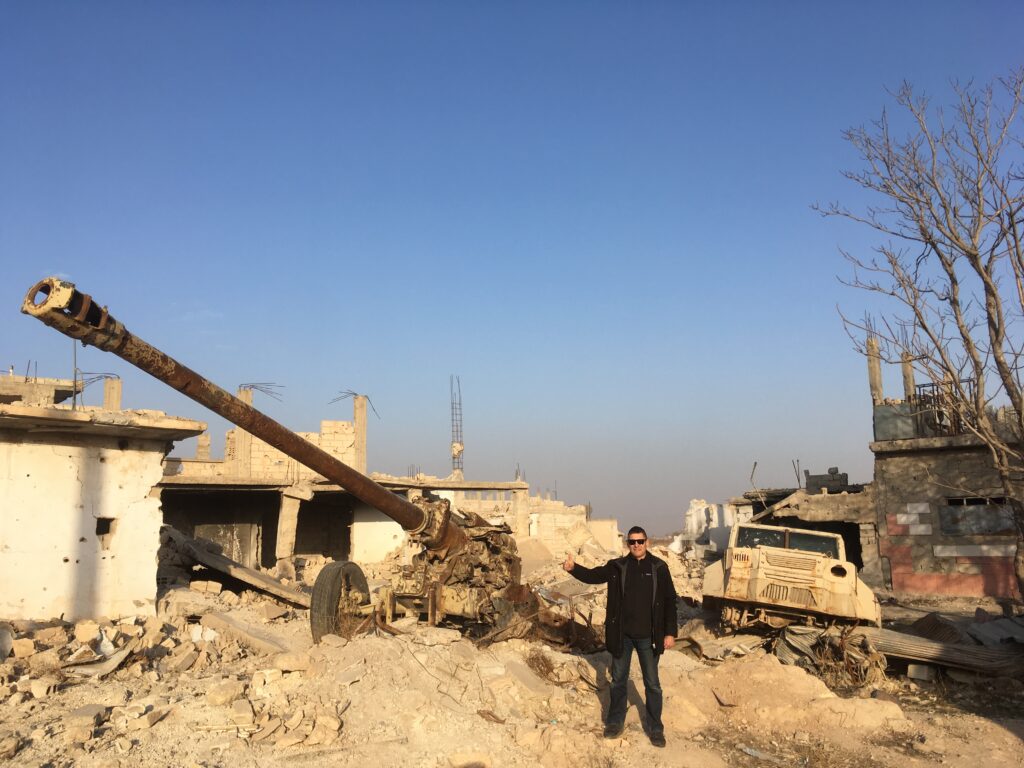
Kobané, January 2018
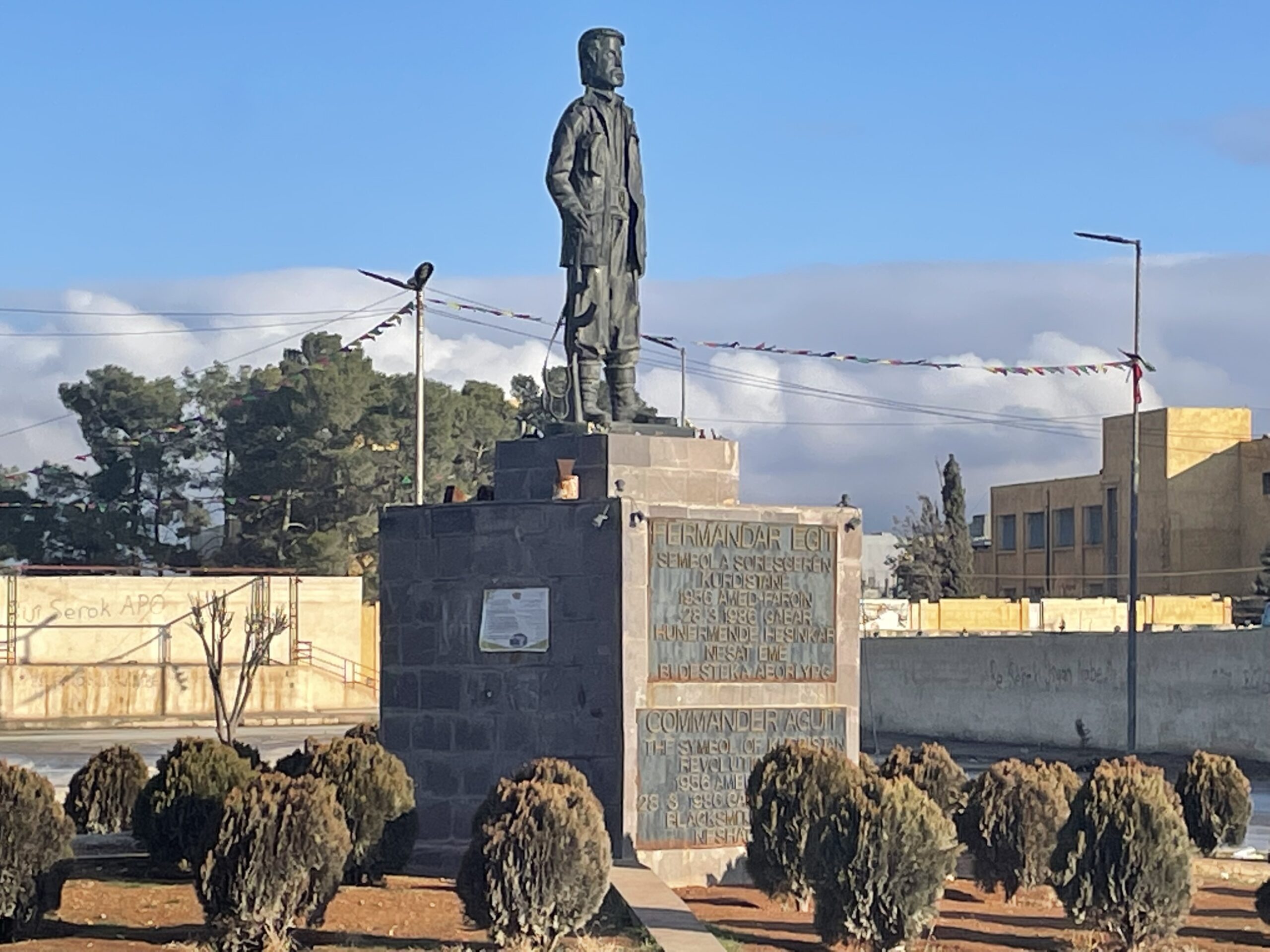
The Kobani region is exclusively Kurdish, yet it is encircled by hostile entities. The city and its surrounding hamlets have been devoid of water and electricity since the Tishrin Dam was seized by al-Sharaa forces. YPG fighters have excavated tunnels in the adjacent hills, but this may not be enough if the Turkish air force teams up with the Syrian army to quell the Kurdish uprising. At the moment, the Syrian military is solely progressing from the south. However, they may also launch an attack from Al-Jarablus and Tel Abyad. As a result, residents have started leaving their villages to find safety in urban areas. They believe that cities provide better defense. Additionally, some members of the prosperous Kurdish community are looking to get away from the rising violence in rural regions. Since Turkey occupied Tel Abyad and Ras al-Ayn in October 2019, the wealthiest Kurdish families have gradually left the city and moved to Raqqa and Qamishli, which are perceived as safer places. The AANES tried to counter this trend by constructing housing for refugees from Afrin, a university, and various employment-generating facilities. However, the reconstruction momentum initiated in 2015 has stalled, and residents have since feared being evicted, like the Kurds of Afrin and Tel Abyad.
Al-Sharaa’s objective is to dissolve the Kurdish community
Is it possible that the Syrian Army will not enter Kurdish areas? Will the YPG protect Kurdish cities and neighborhoods? It seems unlikely, based on the example of the Kurdish neighborhood of Sheikh Maqsoud. During the last 12 months, the Al-Sharaa government willingly allowed Kurdish militias to remain in Aleppo. Its main goal was to erase its jihadist past and to obtain the lifting of sanctions. Therefore, it appeared conciliatory towards the Kurds, who still had considerable support in the West. On March 10, 2025, the Syrian president and Mazloum Abdi reached an accord regarding the integration of the SDF and the territory of the AANES. Although this agreement granted the parties some autonomy, it was ultimately a ruse to pacify the West in response to the recent massacre of the Alawites. The emerging Syrian government is increasingly Islamist and Arab-centric. It may delay a major offensive against the Kurds by a few weeks or months, just like in Aleppo. However, its ultimate goal remains to completely disintegrate them into a Syrian state that is distinctly Arab and Islamist.
The issue of Hassakeh, a primarily Arab urban area, persists. The tribes in the southern and western regions do not want to be governed by the YPG. The city could once again be divided, as it was from 2012 to 2015, when the Bashar al-Assad regime held authority over the Arab sector and the YPG ruled over the Kurdish-populated northern districts. After that, the Syrian regime was able to maintain its grip on a small central area of the province until December 2024. This shows how important the ethnic conflict between Arabs and Kurds is in this city. Qamishli faces the same circumstances. The YPG’s withdrawal from Hassakeh will lead tens of thousands of Kurds to leave out of fear of reprisals. Local and Damascus militias both pose a threat to their safety. Grain silos have been looted near Hassakeh. Numerous houses and shops, whether abandoned by Kurds or not, in Raqqa are suffering the same fate. Under these circumstances, it is difficult for Kurdish leaders to approve the YPG’s withdrawal. The route connecting Hassakeh to Qamishli can be easily blocked by al-Sharaa forces and Arab tribes. The Kurdish neighborhoods would be under siege just like Sheikh Maqsoud, and their outcomes would be similar.
The future of the Kurds in Syria is a matter of concern, as there are no positive outcomes in sight. If they decide to lay down their arms without a fight, they cannot guarantee that they will not face retaliation. If, however, they choose to resist, the consequences will be highly uncertain. Kobani cannot succeed again against ISIS without the support of the United States. The Jazira region will devolve into a bloody conflict between Arabs and Kurds, as the communities are deeply interconnected. Turkey is in a position to deliver the decisive blow to Rojava if the YPG can repel the forces of al-Sharaa.
France shares the United States’ stance
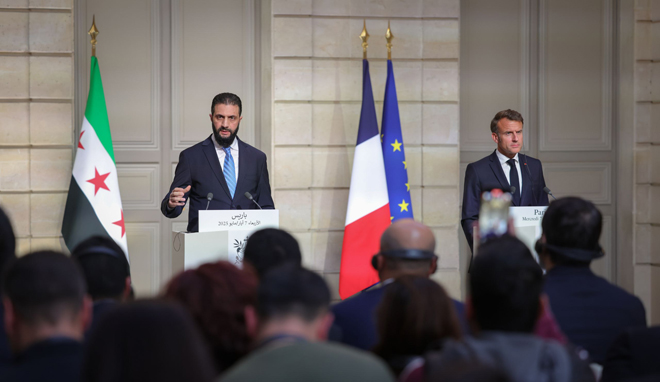
Macron and al-Sharaa, Paris, May 2025
“We will not abandon the Kurds,” but France is not deploying the necessary resources to protect them. This contrasts with France’s actions in 1991, when its aircraft prevented Saddam Hussein from committing genocide. France, however, maintains a military presence in Iraq as part of the anti-ISIS coalition, and it recently attacked an ISIS base in the Syrian desert. Is it prepared to use the same methods to prevent Ahmad al-Sharaa from achieving his objectives? I am quite certain that our actions will not exceed expressions of support. The die is cast for Emmanuel Macron. His agreement with Donald Trump on Syria is clear from the private messages that the US President has made public. Despite the pessimism, we can hope for a surge of political courage and foresight in the face of an Islamist regime that we can expect nothing positive from.