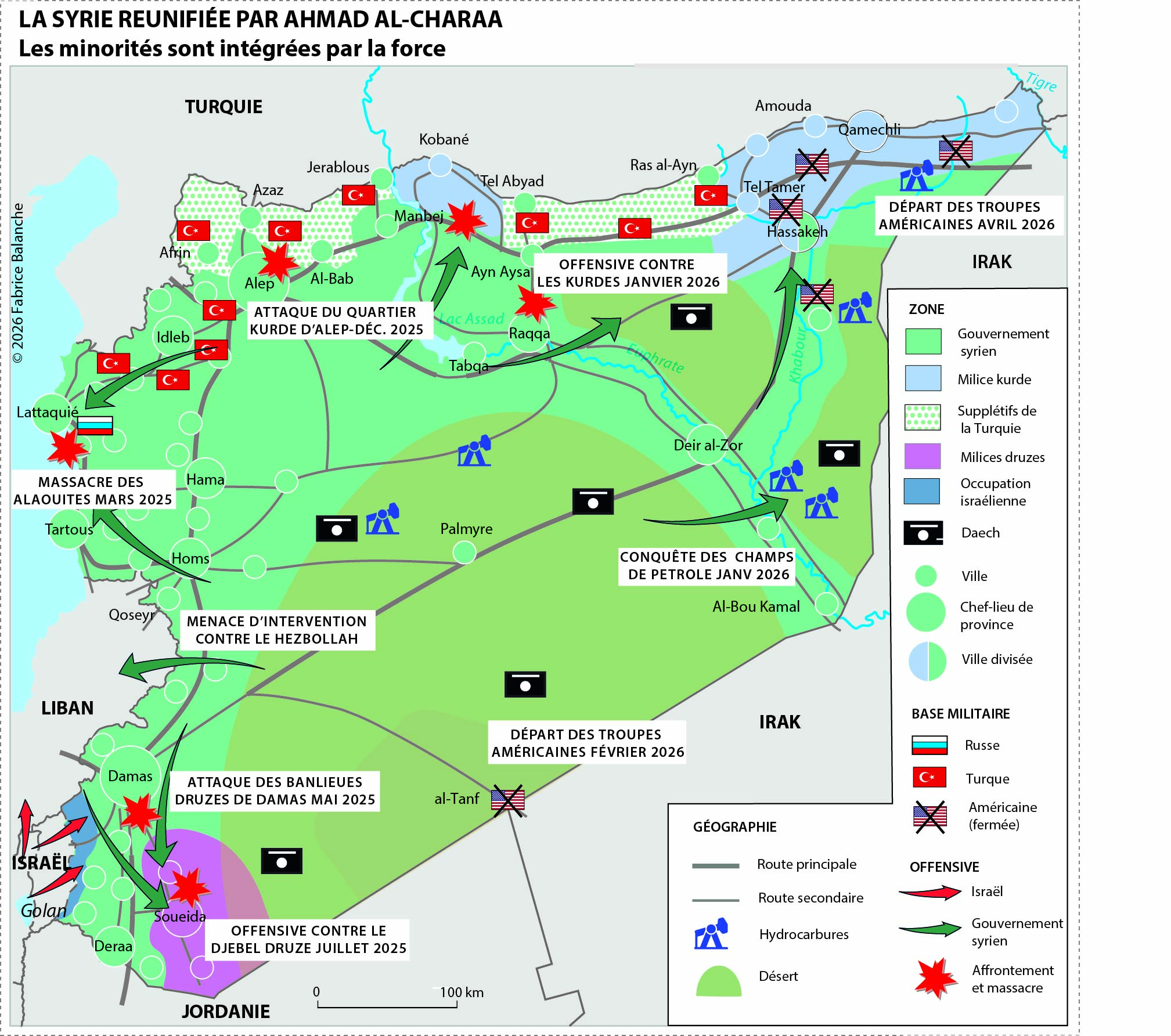
Since assuming power about 18 months ago, Ahmed al-Sharaa has solidified his position as leader of the country. Assassination attempts are unlikely to succeed, and he is effectively integrating Syria into the global community. He currently controls about 95% of the national territory. Despite investment announcements from the Gulf monarchies, reconstruction remains limited. The United Nations reports that 70% of the country’s 25.62 million inhabitants (2025) are in need of humanitarian assistance. This has led to increasing social unrest and provided a breeding ground for the emergence of radical groups (1).
Article published in the magazine Moyen-Orient, June 2026
International Reintegration
In the year 2025, a Syrian head of state made their debut address to the United Nations General Assembly, marking their first appearance at the world body since 1967. Later that year, in November, Ahmed al-Sharaa found himself in the Oval Office, participating in a lively debate with the former commander of US military operations in Iraq, David Petraeus. This meeting held particular significance, as al-Sharaa had once been a member of Al-Qaeda, using the alias Mohamed al-Jolani. In December, the US Congress removed all sanctions against Syria.
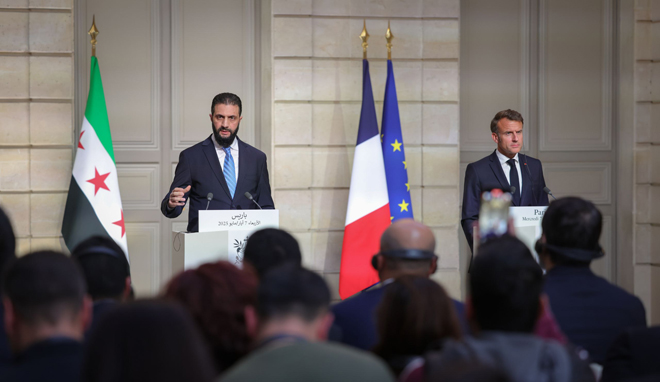
In March 2026, the Syrian transitional president went on a European tour, including a stop in Germany, where about one million Syrians live. Chancellor Friedrich Merz would like 80% of them to return to their home country by 2029. In order for this to happen, however, the European Union (EU) must subsidize the country’s reconstruction. In May 2026, Brussels resumed the Association Agreement it had suspended in 2011, expressing its desire to extend it in order to promote economic recovery. Damascus is particularly keen on securing investment from the Persian Gulf monarchies. Ahmed al-Sharaa has made frequent trips to Saudi Arabia and Turkey in an attempt to maintain a delicate balance between his two most influential mentors. The ex-jihadist made a trip to Moscow in October 2025, displaying a realistic perspective. He did not request that Russia abandon its facilities in Latakia and Tartus, adhering to an unofficial understanding struck between Ankara and Moscow.
At home, normalization has taken the form of an authoritarian and centralized Islamic republic. The Parliament, whose members were co-opted in September 2025, only has an advisory role. The transitional president, who also acts as prime minister, holds most of the power. He can rely on an army of “sheikhs” to oversee the administration and control the territory. In present-day Syria, the term “sheikh” has lost its original meaning, referring to an influential figure combining both political and spiritual authority. Such individuals are generally uneducated, but they are respected for their devotion; they adhere to Islamic law and follow the president’s directives. This resembles the Ba’athist regime (1963–2024), during which all ministers and officials reported to a deputy from the intelligence services and enjoyed only limited autonomy.
Establishment of Autocracy
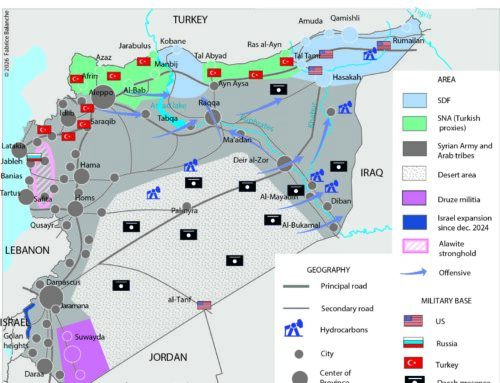
In these circumstances, it is unlikely that federalism will bring about any significant freedom for minorities. In March 2025, after the Alawites, the Druze also complied. Israel’s military action in July 2026 prevented Syria and its allies from capturing territory. Israel launched airstrikes on Syrian troops and the militia recruited by Ahmed al-Sharaa. The conflict took around 1,700 lives, the majority of which were civilians. Jabal al-Druze enjoys de facto autonomy under the leadership of Hikmat al-Hijri and is protected by the Israeli air force. The new Syrian regime had greater success against the Kurds, having managed to retake most of north-eastern Syria in January 2026 with US approval. The Syrian Democratic Forces (SDF) now control only Kobani and the Kurdish part of Hasakah Governorate. An integration agreement helped avert a bloodbath, but neither side is genuinely willing to honour it.
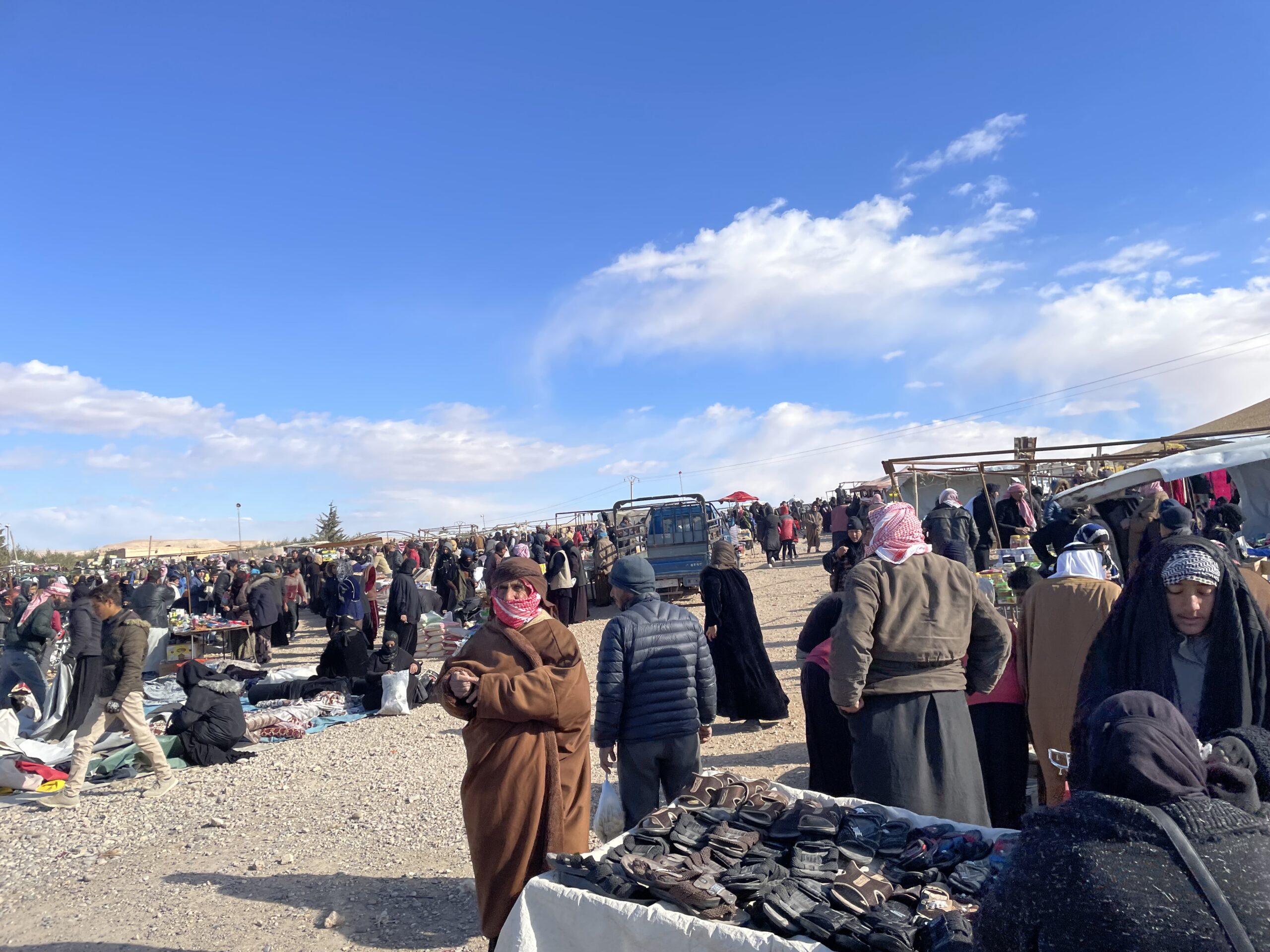
Syria’s economic recovery is progressing at a snail’s pace. Each week, the government unveils ambitious investment plans, mainly in the tourism and high-end real estate industries. These sectors fail to address the needs of ordinary Syrians, who remain largely unaffected by any positive changes in their daily lives. Although supply shortages have ended, prices have skyrocketed, fueling mounting public dissatisfaction. The only legally binding agreements are those related to the restoration of oil wells. However, even if output returns to its pre-war level of 400,000 barrels per day, it would be dwarfed by neighboring Iraq’s production of 5 million barrels per day in 2024 and would be inadequate to revive the national economy.
The industry is in ruins, agriculture is suffering from water shortages, and the country depends on Gulf aid to pay its civil servants and security forces, as well as on remittances from the diaspora. This provides an additional reason for Syrians to remain abroad: if they stopped sending billions of dollars back home each year, Syrian society would collapse.
Syrian society remains deeply traumatized by the repression of the Ba’athist regime and the war. A justice transition process is currently underway, including the trial of Atef Najib, the former head of political security in Daraa and a cousin of Bashar al-Assad, who is currently in exile in Moscow.
NOTE
(1) “Syria: Year Zero,” in Moyen-Orient, no. 68, October–December 2025.